

A pig’s insides were also similar to a human’s, and when they later discussed the details of weapons testing, she could tell the Americans knew that too.
Don’t you try it, Captain Early said with his eyes.
But before the final weapons proposal, before the Americans discovered her species’ figs, before the pigs were shipped down to her planet, she was given a name. Various political operators and military officials called her Sea Slug, and the longer she stayed the more they said it to her face. Early said they knew she had a real name, one spoken in a wet, alien tongue, but that her name, her species, was not a priority. The piggy-aliens were the fuckers who bombed the Moon out of the sky. Everyone knew their name: the Mox. They must hurt the Mox. She must become the American’s asset. And they thought pigs would help.
🦐
When the military base was first founded on Sea Slug’s planet, Texans filled the facility. Now it was mostly Gulf Coast statesmen, Arkansas National Guard members, and Floridian fishermen disproportionately affected by the Second Great Moon Landing. They loved her planet; it was all coastline, all heavy with fish and almost-lobster.
Sea Slug carved out a niche under a tidal pool. Eventually, she couldn’t hide anymore, in the niche and in her mind. The world shook as more ships landed. Soldiers were building missile-carrying rigs on the horizon; soon something would be aimed at the neighboring Mox-controlled planet. Military scientists found Sea Slug on a surveying expedition—they were scared and Cajun. Really, she let herself be found. She let herself be cataloged into a holding cell, be visited by Captain Early, and be reminded of the world outside the walls each time she ran her arms along the fossilized coral stuck into the concrete.
But she kept her two children. They were only pupae. She kept them close to her watery skin like they were strange seedlings. During her first medical examination, the Americans thought they were body parts, not organisms of their own. Once the distinction was made, they named her children too—after old cartoon characters, as if they were punchlines.
🦐
Petty Officer Jolahue: The boys are calling the two little ones Spongebob and Patrick.
Captain Early: Get outta here.
J: We have their names, sir, in written form, but only the mother has physically developed a mouth and she isn’t identifying them.
E: Have you asked nicely?
J: We have a more versed translator dropping down with the next
shipment. He’ll be the point of contact. She might be able to understand
us and just not want to respond, we can’t tell.
E: Christ. Super. What are we feeding them?
J: The adult requires fewer nutrients than what we’re calling its/her “pupae.” Sea Slug loves our compost with corn mixed in. For the pups, we’ve been bringing in tanks of seawater and letting them absorb what they need.
E: That seems like a lot dedicated to prisoners of war. Divert as much manpower as possible away and into atmospheric research. Y’all did get the most recent Mox planetfall memo, right? There should be a committee for this.
J: There is, but I thought you should still be kept up to speed after what our xenohistorian found.
E: About the Mox, or about these slugs?
J: Both, the species were communicating. They found logograms, sir, that pair with Sea Slug’s retinal shapes. If this is a form of identification, the organism in holding is *unintelligible*.
E: Wasn’t that the reported chemical engineer?
J: Chemical weapons engineer, sir.
E: For a planet that’s all tidal pools, it has some amazingly
complex organisms.
J: Quite complex. Our xenohistorian doesn’t even know how they breed—he now thinks cocoons. As of yet, we certainly can’t explain how they built weapons.
E: Would she be able to tell us?
J: She might.
🦐
She was. For every proxy war fought in her lifetime, she was the crafter behind the canisters fired, the eutrophying potions, the gunk accidentally swallowed by slugs in the heat of battle which dissolved their brains during ceasefires. There was always infighting (her employment), always zealous, rabid segments of the population (her patrons). But never troubles with the Mox. The Mox planet waded deep into the sky, relaying messages that took years to write and receive. Their peoples were never allies, only pen pals. Mostly, the scientists spoke to each other, but sometimes she heard of funny messages coming from space. “Do you think God exists?” “Can you guess what number I am thinking of?”
🦐
“They’re killing us,” Early said after he punched her. “We need to get a shot in.”
Thankfully, the children were on the cot when she fell. The holding cell was tight, tighter with Early inside and guards in the doorway. Noises stuck onto surfaces. Her children had developed the ability to hear, but they were born too early to have had much contact with American Southern English. The only sound they understood was their mother expelling fluids from her face.
“Do your part,” Early said, throwing a disassembled pistol onto the floor.
Sea Slug wiped off the fluids. The National Guards smiled. Spongebob and Patrick felt the fear and touched each other’s faces in response. Early repeated himself.
“Engineer,” he added. She did nothing.
“What about the translator?” someone asked. Early quieted them.
“Put it together.”
Deprived of oceanic nutrients, her skin shifted from the color of dark pines to a lackluster green. She was more translucent, like a drawing half-erased. Early was thick edges, isometric angles. And she was proud she lacked a presence—anyone could draw onto her, shift her form into something else. She decided not to respond to the American.
“It’s a gun,” he said. Correct. “I’m allowing you to assemble the gun, but not to fire it. If you fire it…” He pointed to the guards behind him. “Just assemble it. Work for the good guys,” he continued after mutual glaring, “or I’ll assemble it, and shoot your pup.”
He grabbed one and she felt warm. In her society, a deal changed the third time it was offered. She was happy this was true for Texans, too.
Their societies did not overlap in terms of weapons design. Below her was a pistol. Each part was individually produced to gestalt into a lethal device. Each pin, spring, and rivet had a purpose. This was a stupid tool. It had a clear and regular result (fire one ball of metal) and could be disabled with the removal of a single part (hammer, extractor pin, trigger spring).
When the tidal trenches roared with life and war, no one knew what her rockets would do, not even herself. Sometimes they bit or burst or spattered the soul of a victim onto the plankton below. Her work was chiefly improvisation, traveling from skirmish to workshop to the knotted recesses of her mind where she thought about all the blinding ways an organism can be shattered. It was a game in a game. How can you counteract, stop, even test a weapon you don’t understand, couldn’t predict? If you slice a cartridge in half, will it triple in size?
And in front of her was Captain Early shouting assemble and pointing to a cupful of metal.
Fine. This test might be how her oldest child died. But they were really dead anyway, so she gave it no mind. There was a reason no one had seen a slug like her for years. When she refused Early, he kicked her some more but didn’t kill her kid, just let a guard collect the broken weapon.
“This is what ‘bad cop’ looks like,” Early said as he left.
🦐
Ambassador Tilion: Why was I shipped down with a herd of pigs?
Lor Misk Planetary Biology Committee: Weapons testing.
T: I thought we built a weapon back in Mobile? What happened to that?
L: Please sit. Nothing happened to it. Upon arrival, we discovered the Mox had developed better defenses. Until we think outside the box, they will be able to planetfall us and we won’t be able to touch them with our current systems. Petty Officer Jolahue has stated we couldn’t fart in their direction without the Mox preparing a defense. You get the idea; we need help.
T: Can I drink this?
L: Go ahead, but don’t expect to adjust immediately to the taste. You understand that you have been sent for your linguistic background, not your supposed training in war tactics.
T: *sipping* I will act as parley for the captured subject. I’m told it’s an adult, one of those slugs.
L: Yes, we think it is a mother based on its salinity levels.
T: How can it…exist?
L: Let the committee know if you find out, ambassador. Our best guess is that it is an old creature, born before the life cycle broke. Old, like, it has scars.
T: Physical scars?
L: Yes, along what we would think of as sex organs and back. Our xenohistorian is digging up records every day. He’s researching fruit now, but last we heard the scars were probably from the slug’s involvement in the conflict he’s calling “The Velvet Holocaust.”
T: Um, what side was it on?
L: Our man thinks both. We don’t know.
🦐
The soldiers talked about the walks Tilion and Sea Slug took, first around the military base’s indoor pool and later out on the continents of tidal flats. Sea Slug heard the tips of these conversations in passing, or when the guards spoke outside her cell. They made jokes about a beachside romance, and one boy even suggested writing erotica about the fledgling pair.
“They would be a disgusting couple. No one would write about them,” Jolahue once dismissed.
“If we wanna read that we have mangas to turn to!” a young Georgian added.
It was never her gossip. When she talked to the Americans, it was to Tilion, telling him how her species labeled prime numbers, and how she imagined the Mox as more like termites than pigs. She had seen the corral of pigs on their walks, but Tilion thought she was still confused about their purpose. Since the pistol incident, Early hadn’t approached her about building weapons for the Americans. But Tilion knew he would soon, and probably offer her pigs. Someone would need to turn her, and though it hurt Early, he knew Tilion was the best option. Politicians suggested she be tortured until she built a planet-destroying missile. Ambassadors whispered about the Mox preparing another planetfall.
She was questioned about her planet’s fruit and its wars, and where all that went. On one walk, Tilion learned the real names of Spongebob and Patrick. She cradled them constantly, as if the pupae touched the ground their spell would be broken. To the military, the children were the least magical aspects of the whole affair. For years, they had caught similar pupae in their nets, or found translucent corpses of them at low tide. Now rarer, oystermen and patrol boats still found washes of them at sea. Caught in gyres.
“When will yours mature?” Tilion asked in her language towards the end of one such walk. And Sea Slug’s face contorted and squelched in a way that was a note too similar to crying.
🦐
Captain Early: I was told we had a hypothesis about the mother slug?
Lor Misk Planetary Biology Committee: Yes, the ambassador has been talking to the creature.
Ambassador Tilion: Hi.
L: Also, we now believe it reproduces asexually, so maybe we should think about pronoun use.
E: Reproduction? That’s what we’re on about?
T: It connects to the hypothesis.
E: And how does it connect to weapons production?
L: The committee has resolved that there could be leverage here.
T: We think it’s about figs. I’ve been following the xenohistorian’s paper trail and asking about holes in his knowledge. Breakthrough came when I was talking about fruit and eating a fig.
E: Figs? Since when did we have figs here? I thought we shipped down pigs.
T: Yes, well, I brought figs for the ride and the committee liked them, so we’re growing them now. Do you know about the fig wasp? It requires a specific environment to lay its eggs. It loves to use a fig fruit. The wasp, when ready, burrows inside the fig and uses the fruit to keep its eggs safe and healthy. And the fruit needs a specific pollinator to reproduce: this fig wasp. When the wasp burrows, it carries foreign fig sperm into this new fig and lays the sperm there with its eggs. If there are no adult wasps to pollinate a fig, the fruit will blacken and rot.
E: And without a fig the wasps cannot reproduce.
L: Exactly. You arrived on Lor Misk before us, sir. How many adult slugs did you see? Alive, we mean.
E: The crew heard reports of dozens, but I only saw a few on the horizon. Not like now.
T: And was there some kind of fruit on the planet, some kind of sea-fig?
E: Not that I saw.
T: What if there was? Maybe not necessary for egg-laying, but to provide some sort of aquatic envelope for a slug as it transitions from pupae to adult. In some of their communications material, the slugs diagram a transformation process in a dark, tuberous object. This could all connect to the cocoons the xenohistorian was researching. You see, when this species of fruit went extinct, the slugs couldn’t cocoon, and therefore mature–
E: So, they stayed as pupae.
L: Asexual, yet sterile without the sea-fig. Those are the creatures the oystermen are finding in their nets. This is a world on its last generation of teenagers. Now, the Mox do not operate like this, we can’t go on the offense with our ideas, but we recommend that you consider how the slugs would reward us if you gave them another cocoon.
E: We need to test this hypothesis.
T: On it.
E: Could you reverse engineer a sea-fig? Breed a big enough one for Spongebob’s use?
L: We will meet and discuss options.
E: Alright, I like this. This is good. Keep this up.
🦐
The first humans to land on her planet had similar names to one another. Both were types of surveyors, but mostly they were spies. Eventually caught in an intraspecies inquisition, they had their heads blown from their bodies. But before their death and their S.O.S. call, before they roused Early and the Texans from Earth, before political commentators started their conspiracy theories, the two sat on a wet rock and shared a pack of American Spirits. This was the taste of the frontier. In the water below them, floating like inverted diving bells were fruit. They finished the entire pack, and with each butt they threw into the sea they tried to name the new plants. They weren’t quite pomegranates, weren’t quite apples. Then the second got up to urinate, and the first took that to signal the end of the game. The fruits stayed deep, almost as mysterious and untouched as they had been minutes ago.
🦐
She was allowed to spend time at the indoor pool. It was a yellowed place, but she could slip into the kiddie pool with her pupae and wash them, play with them, teach the older one how to submerge itself in a few inches of water. The wives of ranking military officers either lowered their indoor shades and stared, or abandoned their moist citadel when she arrived. When the latter arose, the place was all to herself and her species save for the door-posted guard. Then, she swam. She laid her body against the matted bottom of the pool and swam wide circles, keeping an arm on each of her children and her eyes on the overhead lights. One time, a guard brought her colored chocolate candies from a vending machine. The dyes dissolved in the pool and the whole family played a game in which they dove and tried to absorb each chocolate before it hit the floor. She was feeling what she always felt, but harder, faster, like the end was more definite.
Sea Slug was thinking about writing an autobiography. Working with Tilion and that xenohistorian later in life, when she was sure she was the only surviving adult. Her logograms could be translated and bound together into the last work of native literature. And although the chocolate game only happened once, she knew it would take up a whole chapter.
The Americans changed the nutrient streams of her children. The Americans from Cape Canaveral started spending more time staring skyward at the Mox, writing furiously in their books. Captain Early declared the first weekday a day of official patriotism, where they could let it all out. Sea Slug took a walk one of those nights and heard gunshots and ukulele. An all-female quartet of soldiers were leading folksongs about the Mississippi before it changed its course.
Avoiding the event, Sea Slug passed by the greenhouse. The biologists were testing something bulbous inside, something glistening and organic.
🦐
Ambassador Tilion: Yes, she understands that she is a burden on the military. She sees no reason to help, though. She— *talking with Sea Slug in unintelligible language, growling* She wants to see what her options are.
Captain Early: Well, here’s what her options are: she gives us weapons plans, we build said weapon and mount it, we eliminate the Mox, everyone wins. Tell her she would get to test pigs. And she would be getting more contracts from America if the Mox solution is successful.
T: Yes, uh, okay. Define “successful.”
E: Their planet should be destroyed, but since she works with chemicals, biological destruction would suffice.
T: She’s asking if the genocide would be against the Mox, or all the planet’s species.
E: Christ! We just want the Mox gone. Look at their history. Other contracts could cover attacking other species.
T: Yes, yes, *arguing with Sea Slug* She thinks it is an interesting challenge, but she doesn’t care. Sir. She will die, and her pupae will never mature, never gain real mouths.
E: Fine. All on the table: tell her we could solve her children’s problem. Tell her about our modified sea-fig.
T: She doesn’t believe you. It has been years since the fruit blossomed below.
E: We can show Sea Slug the fig, but she has to leave Spongebob and Patrick in the cell. The only way either of her kids gets close to the thing is if she builds the weapon.
T: She wants a timeline for missile development.
E: *Pounds on table* We’re fucking getting somewhere! We have the resources. Give her two weeks, then we hit the Mox fast.
T: She says after the launch, she must be given the fruit and allowed to leave the facility—not followed. She says the fruit must be bountiful for her species to return. If the tidal pools are to teem again with colonies, if the lonely pupae are to ripen into true old age, the fruit must bear seeds. And the fruit and its seeds must not be poisoned by whatever ruined the previous fruits.
E: Hold up. Jolahue! Jola–
Petty Officer Jolahue: Sir.
E: What do the scientists think killed the sea-figs, and have we fixed that?
J: Sir, we think it was tobacco mosaic virus. We’ve bred for disease-
resistance I am told.
E: Translate that it’s fixed, Ambassador.
T: *Arguing with Sea Slug loudly* Yup, wait a minute, wait. She wants time to decide.
E: I thought we had a dead-set deal.
T: She wants time.
E: If she doesn’t tell me by Friday, I’ll smash the sea-fig at our next party. We can start smashing her children like the governors have been asking. I prefer carrot to stick, but the airwaves are full of people asking for a weapon. Right now, that’s her use.
🦐
While Sea Slug was reintroduced to the fruit, Tilion stood near the corral, watching her outline behind the steam-covered glass. She was inside the greenhouse, framed against the fruit, running her arms down it, into its main canal. It was emotional for her, as so many reintroductions were. Her planet had taken the fruit for granted, until they didn’t, and now she held it in her arms. Outside, the sows were squealing in their mud pits.
Colonists used to dump breeding couples of pigs on uninhabited islands in the New World. Just in case. Without natural predators, they flourished, and in 1609 when an English rescue ship was wrecked south of Florida, the sailors came across an island. It was littered with pigs left by Spanish explorers nearly a century earlier. The beasts swallowed baby birds from nests and uprooted fruit, but when the lost sailors found them, all was warm for a moment. Now the biologists were talking to Sea Slug, confirming the particulars of this deal. The sea-fig could easily be hers. It was Wednesday.
When she got back to her holding cell, she cradled her pupae. Without
the fruit, they could last another five years before their organs began to give. She knew they were not special, only two of the countless
finales, but she loved them more than the rest, and knew that love was right, no matter if they were borne from her sex or cloned in the heat of battle. Her engineer brain kept running, calculating victory types. Thinking about the days it took for fruit seeds to turn into plants. The atmospheric composition of her planet and the Mox one, and what kind of material a rocket would need to be encased in to work. The population rate of her species if she planted fruits across the shoreline. If they cloned themselves instead of procreating, it might only be decades before they re-founded the old capitals, learned how to read the logograms, started the long conversations again. Her good people, her kin. Sea Slug knew they’d be living under a gravestone: smoothly orbiting, planet-sized, but a gravestone just the same.
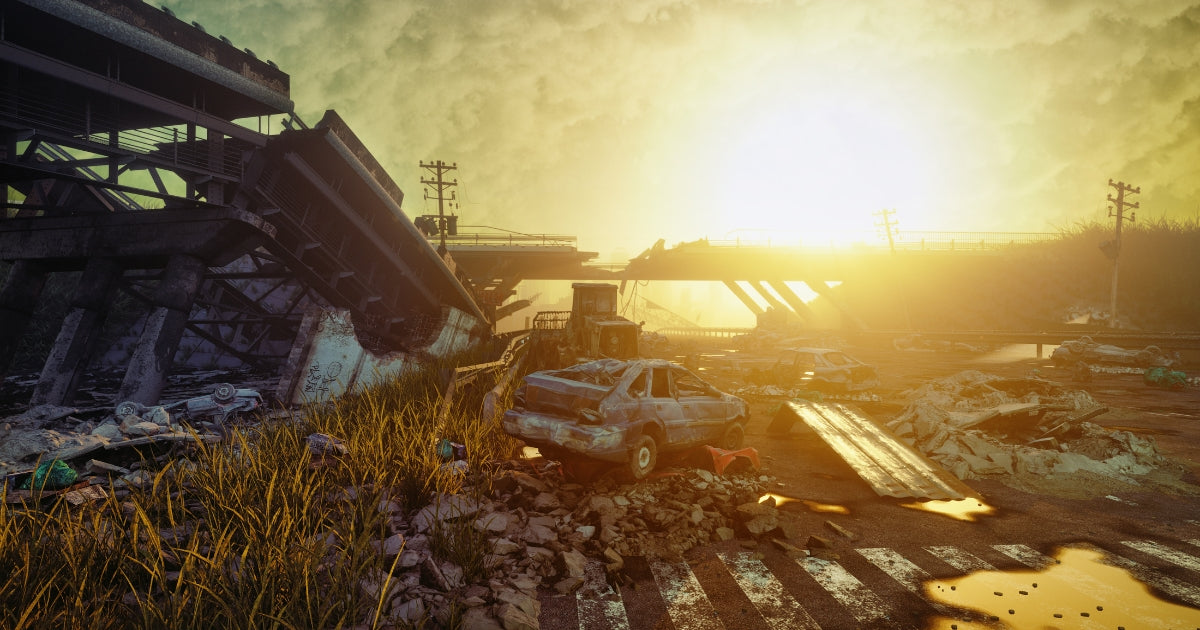
Her walks with Tilion continued into Thursday. Out to the tidal flats, him munching his plantation fruit. He asked why she was still questioning Early’s deal. She answered: the genocide of another species. The same argument that passed through the military’s lips passed through his: the Mox were bent on destroying humans, and they fired first. Years after the Landing, America was still pulling chunks of the Moon out of the Gulf of Mexico, still redrawing the borders as the tides continued to erratically shift. Far away, but close enough, Neptune was nothing more than a cloud of dust. Take the deal, and at least she’d save another species: her own.
When the slugs fought, it was never to totally cleanse the land, she said. Not even during the Velvet Years.
The way things are going, Tilion said, there will be a holocaust. There are only so many celestial bodies left in human’s solar system that the Mox can planetfall: the military aren’t revenge-driven psychopaths, they’re mathematicians. If she doesn’t take the deal, another engineer will replace her.
If she could’ve been replaced, Early would’ve done it a while ago, she quipped.
Things take a while to begin, but they would get done. She knew what he meant. Refusal was only delay—the conflict would end somehow.
Was he told to try to convince her? she asked.
He was an ambassador.
She thought she had someone to confide in.
She had her holding cell, he said. He was just giving her the hard truths. There was no great way to cut it.
Could he help her with a hard truth, then?
Sure, he said. They went to the pig corral in silence. She laid her pupae out on a bench and took up a wooden stake.
She improvised. She told him before how disgusted she was at American firearms, didn’t he know this? There was no reason for pigs, because there was no reason for physical weapons testing. She wouldn’t even know what she would be building.
How will this work, then? he asked. Who would ensure missile safety, ensure its power?
They all would. It is a dance. She could use the Americans’ help with liftoff, but her planet’s chemicals are complex, full of factors alien minds would stretch to understand. She could try to explain to the scientists and crafters, but she didn’t need them to understand. It would work on impact; their problems would be solved.
Fine. What were they doing with the pigs?
Killing them, she said as she tried to stab one with a stake.
Whoa, whoa. They could just use them for the barbecue later. Or, or why not let them go free?
Sea Slug dropped the stake, melted her arms back into her body. Early had told her a story, about Jamestown, where he was a historical reenactor before the draft. The Jamestown colony was dying, expecting a rescue ship, but the sent vessels kept crashing. Sea Slug couldn’t stop thinking about what those wrecked sailors saw as they ran aground and looked upon their isolation. If Sea Slug released the pigs, their spread couldn’t be healthily controlled. Instead, she wanted to kill them, kill them and get this over with.
Tilion heard her, he said.
🦐
Captain Early: Does that mean she said yes?
Ambassador Tilion: It felt like her way of preparing for weapon crafting. A final goodbye?
E: She cooperates and there’s no net loss of a species. Did you tell her that?
T: Just as you said.
E: Well, it’s a quarter past midnight. Officially Friday.
T: She’s sleeping with her pups, sir, and you did say the end of the day was the deadline. As soon as she decides, I think she’ll start building and not stop. She’s that kind of mother.
E: I’ll get a crew of workers on standby. How great would it be to launch during the barbecue?
🦐
She spent that night making the capsule to the missile. Throughout Friday, she urged her American crafters on like performance companions. Captain Early smiled from his station, his wife brought out a chair to watch the construction. Welders, carpenters, and engineers fitted a chassis to Sea Slug’s recommendations. Rocket scientists took notes, but despite everyone’s efforts, Sea Slug was right: they didn’t totally understand. Safety czars and gangs of hawkeyed crafters checked the chassis components, the tip angle. Together, they filled the body of the weapon with bags of fertilizer compounds—ammonia salts that doubled as explosives. It was an army inside an army working on that beach, all weekend. It was run-through as best as any improvisation could be run-through. They took water breaks in unison.
When the sun set Monday afternoon, the missile neared completion. It was the second largest weight on the horizon. Only the planet of the Mox loomed plump beyond it. Sea Slug inserted the central capsule into the missile’s heart; weapons crafting without her pupae on her was a new feeling, but somewhat comfortable. She had made the right choice.
Around her, fires lit up and the barbecuing of the pigs began. Soldiers gave speeches at no one in particular, until it was time.
As the weapon lifted off her planet, she told Tilion that it was proper etiquette to give warning of a devastating strike by distributing leaflets to the soon-dead civilians.
“We did that, too. In Hiroshima,” he said.
“I wrote with logograms,” she said in near-English.
“What…what did you write?”
Silence, there. Partying on the beach, but around her just silence, and then Tilion passed Sea Slug the fruit.
“We’ll come by the cell later to talk, I know the biology committee wants a timeline for when your chemical weapons will start affecting the Mox. But here, go back to your cell, give your kids what they deserve.”
🦐
In the end, she disobeyed Tilion. She left the base and went straight to the tidal pools. Sea Slug went straight back to hiding. The fruit in one armpit, Spongebob hidden in the other, she sank into the wet-black.
🦐
Once her pupae matures and forms a mouth, they will ask what happened to their sibling. She will explain how they became their own seed, how they were secretly loaded into a capsule of a rocket, a rocket full of stolen fruit seed, fertilizer, papers, and shot away. To colonize, to clone, to ally with the Mox. Because she was a good improviser, but a better planner. It would be only this late that Sea Slug will feel comfortable dropping the nickname the Americans gave them, the pronouns they used. Back home, the color of a crocodile, they are original again.
They might be found, or the Mox destroyed, someday. One of their children might die, but, by splitting their planets and plans, both strands of their family would not perish, their species would not perish. They had the Americans, the pigs, their fruit, to thank for that. Hidden in their new cell, their new niche, they would tell their now-adult child what they wrote on those thousands of leaflets.
“Can you guess what number I am thinking of?”
Dedicated to Arkadiy Bakhmutov
and the hundreds of Russian missile scientists
who sought to better the lives of their families
by defecting to North Korea in 1992, and failed.